
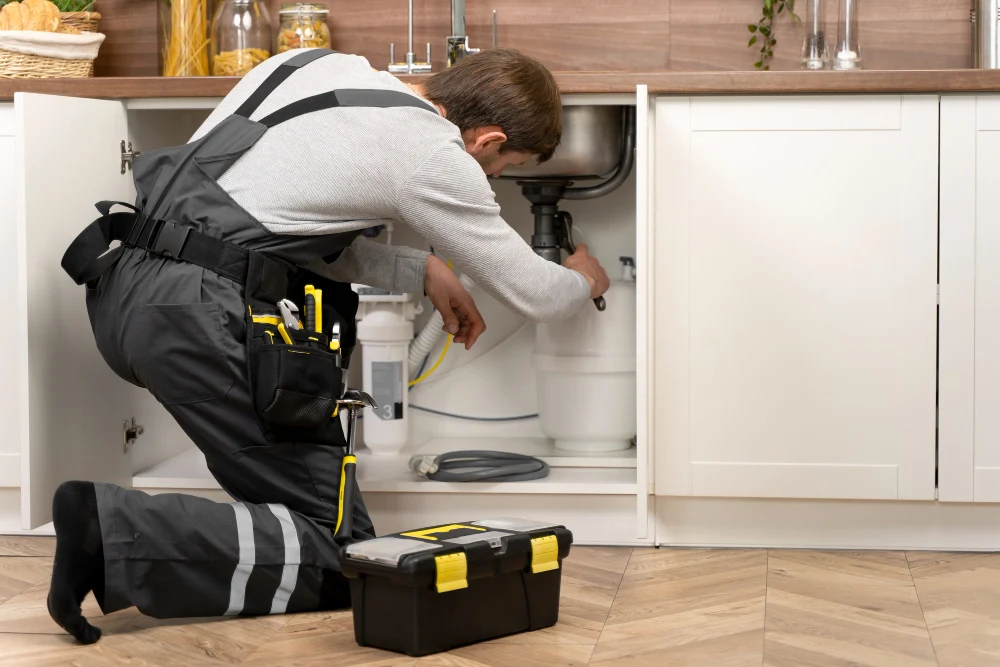
You open the cabinet under the kitchen sink to grab a cleaning spray and find the base damp, swollen or smelling musty. Don’t panic, but don’t ignore it either. Any under sink leak repair starts with one job: working out exactly where the water is coming from.
This guide walks you through the signs to look for, the usual suspects behind a leaking kitchen pipe, what you can safely check yourself, and when it’s time to bring in a plumber.
Common Signs of a Kitchen Sink Leak
Some leaks announce themselves with a puddle. Others are slow and quiet, and you only notice them once the cabinet starts to suffer. Watch for:
- Water pooling on the cabinet floor or dripping from a pipe joint
- A soft, warped or stained cabinet base
- A musty smell or mould spots inside the cabinet
- Water marks on the floor in front of the sink
- Drips that appear only when the tap is running or the sink is draining
That last one is worth noting, because when the leak shows up tells you a lot about where it might be.
Why Is Your Kitchen Sink Pipe Leaking?
A kitchen sink pipe leaking can have more than one cause, and you can’t always tell which by looking. The usual possibilities are:
- Loose connections. The slip nuts on the drain trap and the fittings on the water supply lines can work loose.
- Worn washers and seals. The rubber parts inside fittings can harden, crack or shift out of place.
- Damaged pipes or hoses. A crack, corrosion or a worn flexible supply hose lets water escape.
- Drain connections. The joint between the sink strainer and the drain pipe, or the trap itself, can leak as water drains.
- Tap connections. A leak at the base of the tap or in the hoses feeding it can run down and drip under the sink.
Several of these look alike from the outside. Treat them as possibilities until the real source is confirmed.
Under Sink Leak Repair: Finding the Source First
Water often runs along a pipe before it drips, so the wet patch isn’t always where the leak starts. That’s why good under sink leak repair begins with a few simple checks.
Clear and Dry the Cabinet
Take everything out, wipe the pipes and the cabinet base dry, and lay a dry towel or tray underneath. A dry starting point makes fresh water much easier to spot.
Test One Thing at a Time
Run the tap without filling the basin, then check the supply pipes and tap connections. Next, fill the sink, let it drain, and watch the trap and drain joints. Running a dry tissue along each joint helps you see small amounts of moisture.
Note What You Find
Take a photo of where the water appears and when it happens. Even if you can’t fix it yourself, this gives a plumber a clear starting point.
Kitchen Sink Leaking Around Edges: Causes and Solutions
Sometimes the water isn’t coming from the pipes at all. If you find the kitchen sink leaking around edges, the problem is usually at the top of the sink, where it meets the worktop. Possible causes include:
- Cracked, worn or missing sealant between the sink rim and the countertop
- A sink that has shifted because its clips or brackets have loosened
- A leak at the base of the tap, which can look like an edge leak
- Splashed water seeping past the rim and running along the underside
Damaged sealant can often be removed and replaced. The surface needs to be clean and fully dry, and the sealant should suit both the sink and the worktop material. If the sink has moved, or water still appears after resealing, have it checked properly, as the mounting or the tap may be the real issue.
Kitchen Sink Leakage Solution: What You Can Safely Do
There’s no single kitchen sink leakage solution that suits every case. These steps are safe for most homeowners while you work out what’s wrong:
- Stop using the sink if the leak gets worse when water runs.
- Put a bowl or tray under the drip and keep the cabinet as dry as you can.
- Keep water away from sockets, plugs and any appliances nearby.
- Close the isolation valve under the sink, or the main water supply, if it’s safe and easy to reach.
- If a slip nut on the drain trap is clearly loose, tighten it gently by hand. Don’t force it, as overtightening can damage plastic fittings.
- Avoid chemical drain cleaners unless you’ve had proper advice. They aren’t suitable for every pipe or problem.
It’s also worth acting quickly for another reason. The Sharjah Electricity, Water and Gas Authority (SEWA) supplies the emirate’s drinking water from underground and desalination sources, so even a slow drip under the sink is treated water going to waste.
How to Fix Sink Disposal Leaks Safely
If a food waste disposal unit is fitted under your sink, it adds more joints that can leak. Before you try to fix sink disposal problems, turn off its power supply, and never put your hand inside the unit. You can look for drips around its connections and the drain pipe. Anything involving the motor, wiring or internal parts should be handled by a qualified professional.
When to Call a Professional Plumber in Sharjah
Basic checks only go so far. Call a plumber if:
- You can’t find where the water is coming from
- The leak continues after you’ve tightened a loose fitting
- A pipe, hose or fitting is cracked, corroded or damaged
- Water has reached the floor, walls or nearby electrics
- The cabinet base is soft, swollen or mouldy
- The shut-off valve won’t close or is leaking itself
If water is flowing and you can’t stop it, treat it as urgent. Our guide to emergency plumbing leak repair in Sharjah covers urgent leaks in more detail.
Once the leak is fixed, regular checks make it easier to catch the next problem early. You can read more about routine plumbing maintenance in Sharjah in our earlier guide.
How Dar Al Tarmeem Can Help
Dar Al tarmeem is a property maintenance company based in Sharjah, working with homes and businesses across Sharjah and Dubai. Its Plumbing Services in Sharjah cover leak and burst pipe repairs, pipe and drain problems, fixtures, new installations, routine maintenance and emergency repairs.
If you’ve found water under your kitchen sink and want it looked at properly, get in touch with the team to arrange a visit.
Conclusion
A damp cabinet is easy to put off, but the water won’t fix itself. Dry the area, find where the leak starts, and take the simple safety steps above. If the cause isn’t clear, or the job goes beyond tightening a loose nut, book a professional under sink leak repair instead of guessing.
Frequently Asked Questions
1. Can I do an under sink leak repair myself?
Sometimes. If a slip nut on the drain trap is simply loose, gentle hand-tightening may stop the drip. Cracked pipes, damaged fittings, leaks you can’t trace, or anything near electrics should be checked by a qualified plumber instead.
2. Why is my kitchen sink pipe leaking only when the water drains?
A leak that appears only while the sink drains usually points to the drain side, such as the trap, its slip nuts or the strainer connection. It’s a useful clue, but a plumber should confirm the exact cause first.
3. Is resealing the right fix for a kitchen sink leaking around edges?
It can be, if the sealant between the sink and the countertop has cracked or come away. However, an edge leak can also come from the tap base or a loose sink, so check those before resealing the rim.
4. What is the best kitchen sink leakage solution while I wait for a plumber?
Stop using the sink, place a container under the drip and keep water away from electrics. If it’s safe and easy to reach, close the isolation valve under the sink or turn off the main water supply.
5. When should I call an emergency plumber for a kitchen sink leak?
Contact an emergency plumber if the leak is severe, water is spreading quickly, or you cannot stop the flow safely. Prompt attention can help limit water damage to kitchen cabinets, flooring and nearby fixtures.